

Premium Wine Market to Reach USD 86.27 Billion by 2035 Driven by Premiumization Trends at 5.36% CAGR
Premium Wine Market
Premium Wine Market is projected to reach USD 86.27 billion by 2035, driven by premiumization, sustainable wines, evolving consumer tastes, and global demand.
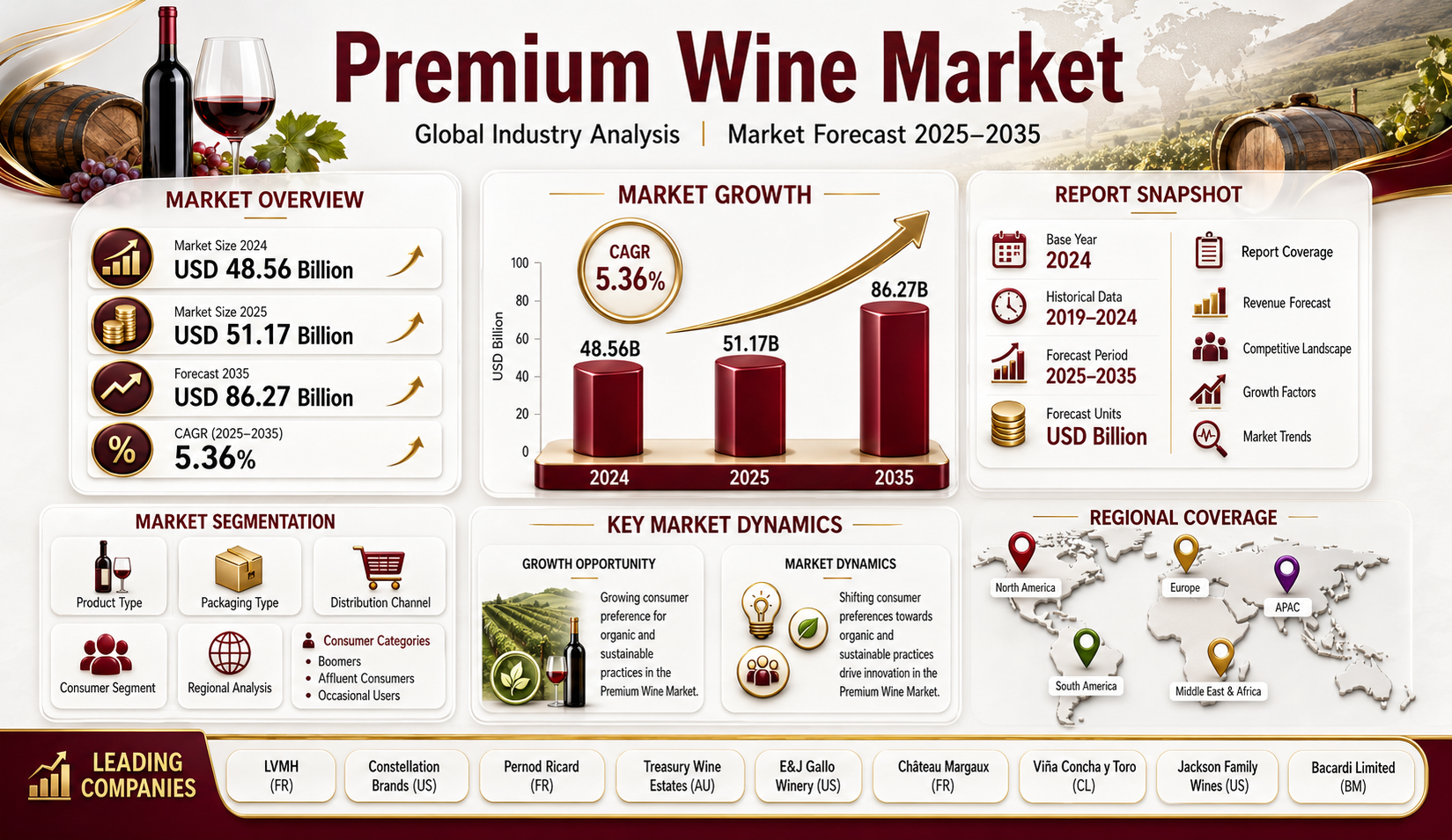
NEW YORK, NY, UNITED STATES, July 9, 2026 /EINPresswire.com/ --The Premium Wine Market is witnessing remarkable growth as consumers increasingly prioritize quality, authenticity, and unique tasting experiences over volume consumption. Premium wines are no longer viewed solely as luxury beverages but have become an important part of lifestyle, fine dining, gifting, celebrations, and investment portfolios. Rising disposable income, expanding wine culture across emerging economies, and growing awareness of regional wine varieties continue to strengthen market demand. The market was valued at USD 48.56 billion in 2024 and is expected to grow from USD 51.17 billion in 2025 to USD 86.27 billion by 2035, registering a CAGR of 5.36% during the forecast period.
Consumers are increasingly seeking wines that offer distinctive flavors, premium craftsmanship, vineyard heritage, and sustainable production methods. Digital commerce, wine tourism, personalized recommendations, and premium retail experiences are making high-quality wines more accessible to consumers worldwide. As producers continue investing in innovation, organic cultivation, and premium branding, the industry is expected to maintain steady long-term growth across developed and emerging markets alike.
Competitive Landscape
The competitive landscape remains highly dynamic, with leading producers focusing on premium product innovation, sustainable vineyard management, luxury branding, strategic acquisitions, and expansion into high-growth markets. Companies are also strengthening their digital sales channels while introducing limited-edition collections and region-specific premium labels to enhance brand loyalty. Major companies operating in the market include LVMH, Constellation Brands, Pernod Ricard, Treasury Wine Estates, E&J Gallo Winery, Château Margaux, Viña Concha y Toro, Jackson Family Wines, and Bacardi Limited.
Free Sample Copy – Access A Complimentary Copy of Our Report to Explore Its Content and Insights
https://www.marketresearchfuture.com/sample_request/35495
The industry's growth is supported by multiple structural factors, including rising global tourism, premium hospitality services, evolving food pairing culture, increasing wine education, and consumer willingness to pay more for exceptional quality. Younger affluent consumers are increasingly exploring premium wine collections through online platforms, wine clubs, subscription services, and curated tasting events. Meanwhile, traditional wine consumers continue upgrading to premium labels that emphasize origin, aging potential, and craftsmanship.
Product innovation has become one of the strongest growth drivers. Producers are introducing limited-production vintages, organic wines, biodynamic offerings, low-sulfite formulations, and naturally fermented wines to meet changing consumer preferences. Advanced vineyard technologies, climate-adaptive cultivation practices, and improved storage solutions further enhance product quality while supporting sustainable production goals.
From a product type perspective, the market includes Red Wine, White Wine, Rosé Wine, Sparkling Wine, Dessert Wine, and Fortified Wine. Red wine continues to account for the largest market share due to its established consumer base, aging characteristics, and compatibility with premium dining experiences. White wines remain highly popular in hospitality and leisure segments owing to their refreshing taste profiles. Sparkling wines continue gaining momentum during celebrations, weddings, luxury events, and corporate gifting. Rosé wines are witnessing increasing popularity among younger demographics, while dessert and fortified wines maintain steady demand within niche premium consumer segments.
Based on packaging type, the market is segmented into Glass Bottles, Premium Gift Packaging, Bag-in-Box, and Other Packaging Formats. Glass bottles continue to dominate the premium category because they preserve wine quality while reinforcing luxury perception. Premium gift packaging has emerged as an important growth area driven by festive occasions, corporate gifting, and collector demand. Although bag-in-box packaging traditionally served value-conscious buyers, premium versions with enhanced preservation technology are gradually gaining acceptance among environmentally conscious consumers seeking convenience without compromising quality.
The market is also segmented by distribution channel, including Specialty Wine Stores, Supermarkets & Hypermarkets, Online Retail, Direct-to-Consumer Sales, Restaurants & Hotels, and Duty-Free Retail. Specialty wine retailers remain preferred destinations for premium wine purchases due to expert guidance and curated selections. Restaurants and luxury hotels continue driving premium wine consumption through fine dining experiences. Online retail has become one of the fastest-growing channels as consumers increasingly purchase wines through digital marketplaces offering personalized recommendations, virtual tastings, and convenient home delivery. Direct-to-consumer winery sales are also expanding through memberships and exclusive releases.
The consumer segment includes Boomers, Affluent Consumers, Occasional Users, Millennials, and Emerging Premium Buyers. Affluent consumers continue to generate the highest revenue due to their preference for luxury brands, exclusive vintages, and collectible wines. Boomers remain loyal purchasers of premium wines, appreciating heritage brands and aged selections. Millennials are significantly influencing future market growth by exploring diverse wine regions, sustainable labels, and experiential consumption. Occasional users increasingly purchase premium wines for celebrations, gifting, and social gatherings, expanding market opportunities throughout the year.
Regionally, Europe remains the largest Premium Wine Market due to its centuries-old winemaking tradition, internationally recognized appellations, and strong domestic consumption. Countries such as France, Italy, and Spain continue leading global production while attracting millions of wine tourists annually. Strong export demand and continuous premium product innovation further strengthen Europe's market leadership.
North America represents another significant regional market driven by rising disposable incomes, sophisticated wine culture, premium restaurants, and expanding e-commerce channels. Consumers increasingly favor organic, sustainable, and locally produced premium wines. The United States remains one of the world's largest premium wine consumers, while Canada continues experiencing growing interest in imported premium brands and regional wineries.
The Asia-Pacific (APAC) region is expected to witness the fastest growth throughout the forecast period. Rising middle-class populations, urbanization, western lifestyle adoption, luxury hospitality expansion, and increasing awareness of wine appreciation are fueling premium wine demand across countries including China, Japan, South Korea, India, and Australia. Younger consumers are becoming more receptive to premium international wine brands through social media, digital marketing, and premium retail experiences.
South America continues benefiting from expanding premium wine exports, supported by internationally recognized vineyards and favorable climatic conditions. Countries such as Chile and Argentina are strengthening their global reputation by producing premium wines with strong value propositions. Meanwhile, the Middle East and Africa (MEA) region is gradually emerging as a niche premium market due to luxury tourism, hospitality investments, and increasing demand within premium hotels and international dining establishments.
One of the most influential market opportunities is the growing preference for organic and sustainable winemaking practices. Consumers increasingly evaluate products based on environmental responsibility, ethical farming, recyclable packaging, and carbon footprint reduction. Vineyards are investing in renewable energy, water conservation technologies, biodiversity initiatives, and sustainable certifications to differentiate themselves in an increasingly competitive marketplace. These initiatives not only strengthen brand reputation but also align with evolving consumer expectations across premium beverage categories.
Looking ahead, the Premium Wine Market is expected to experience sustained expansion as premiumization trends continue reshaping global beverage consumption. Investments in digital engagement, luxury branding, vineyard innovation, personalized consumer experiences, and sustainable production practices will remain central to long-term competitive strategies. With consumers increasingly seeking authenticity, heritage, superior quality, and memorable experiences, premium wine producers are well positioned to capitalize on evolving global demand through 2035.
Frequently Asked Questions (FAQs)
Q1. What is driving the growth of the Premium Wine Market?
The market is primarily driven by rising consumer preference for premium alcoholic beverages, increasing disposable incomes, expanding wine tourism, growing demand for organic and sustainable wines, digital retail expansion, and continuous product innovation across premium wine categories.
Q2. Which region is expected to witness the fastest growth in the Premium Wine Market?
The Asia-Pacific region is projected to register the fastest growth due to rapid urbanization, increasing middle-class income, expanding luxury hospitality, growing awareness of premium wines, and rising consumer adoption of international wine brands.
Read Our Related Research Report
Luxury Wines Spirits Market –
https://www.marketresearchfuture.com/reports/luxury-wines-spirits-market-7236
Still Wine Market –
https://www.marketresearchfuture.com/reports/still-wine-market-6607
Port Wine Market –
https://www.marketresearchfuture.com/reports/port-wine-market-21321
Canned Wine Market –
https://www.marketresearchfuture.com/reports/canned-wine-market-21809
Commercial Wine Cooler Market –
https://www.marketresearchfuture.com/reports/commercial-wine-cooler-market-27113
Sagar Kadam
Market Research Future
+1 628-258-0071
email us here
Legal Disclaimer:
EIN Presswire provides this news content "as is" without warranty of any kind. We do not accept any responsibility or liability for the accuracy, content, images, videos, licenses, completeness, legality, or reliability of the information contained in this article. If you have any complaints or copyright issues related to this article, kindly contact the author above.
